

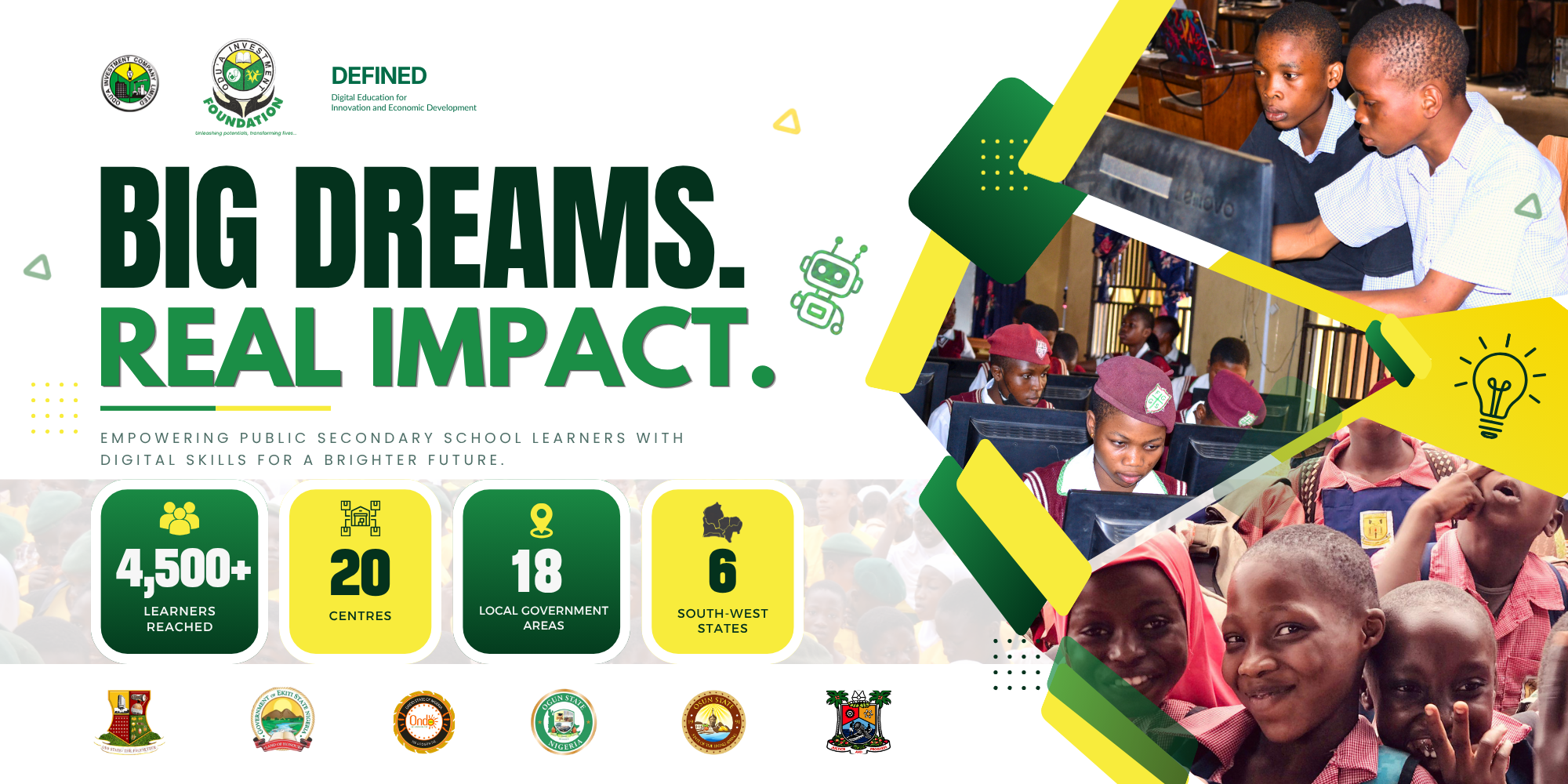
Six states. 20 coding centres. More than 4,500 learners reached.
At the 2026 Byte Busters Showcase, public secondary school students demonstrated what happens when access to digital education meets the opportunity to create.
What does a secondary school student in Ekiti do when faced with the problem of kidnapping? What can students in Lagos build to make communication easier for people who are Deaf? And how might students in Ondo use artificial intelligence to change the way their classmates learn?
At the second Byte Busters Showcase, these questions had answers. They came in the form of applications, digital platforms, educational tools and other technology-driven projects developed by public secondary school students across Southwest Nigeria.
On Friday, 30 October 2026, the International Conference Centre at the University of Ibadan hosted the Byte Busters Showcase 2026, organised by Odu’a Investment Foundation (OIF) under its flagship Digital Education for Innovation and Economic Development (DEFINED) Project.
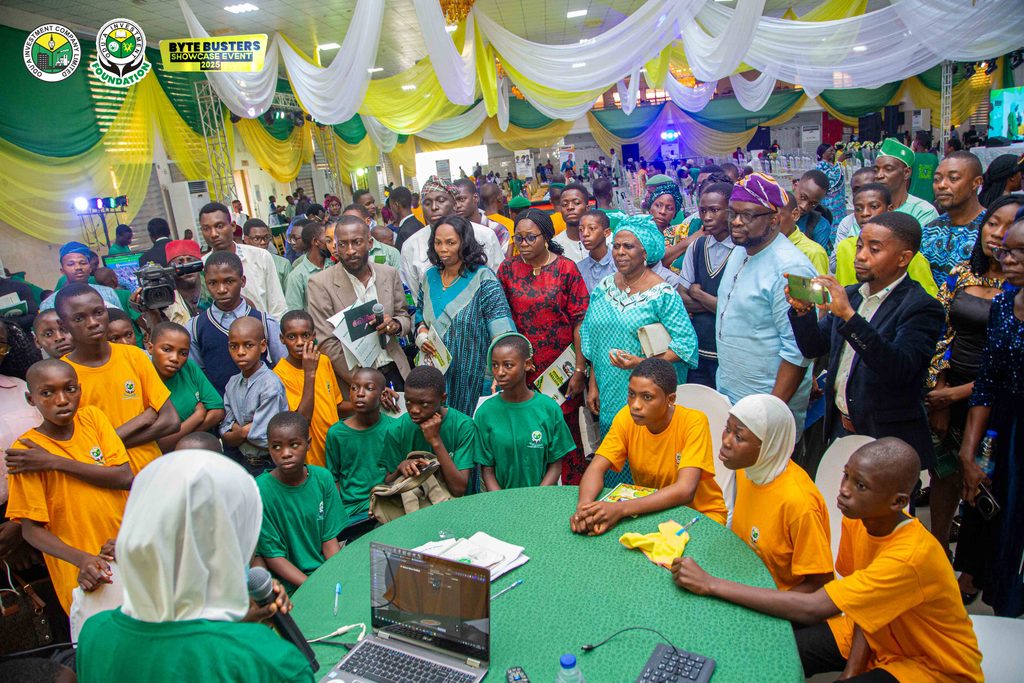
The event brought together students, educators, government representatives, technology professionals, business leaders and other stakeholders to witness the progress of the Foundation's digital education initiative.
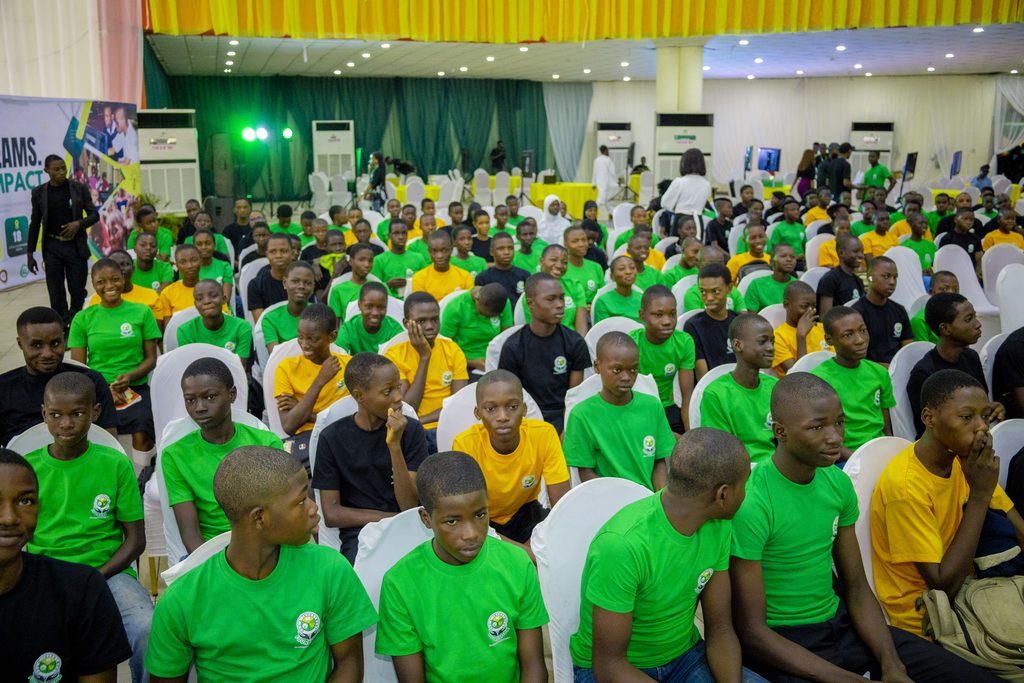
For the students, it was an opportunity to present months of learning, experimentation and problem-solving. For Odu’a Investment Foundation, it was an opportunity to demonstrate what its investment in digital literacy and youth development across the six Southwest states is beginning to produce.
And for everyone in attendance, the projects offered a glimpse of what young people can achieve when they have access to the tools and guidance to explore their potential.
The Byte Busters Coding Club is one of the practical expressions of Odu’a Investment Foundation's commitment to expanding educational opportunities and preparing young people for a technology-driven economy.
Through the DEFINED Project, the Foundation is working to make digital education more accessible to learners in public schools across Oyo, Ogun, Osun, Ondo, Ekiti and Lagos States.
Byte Busters operates as an after-school coding club where students are introduced to coding, artificial intelligence, computational thinking, digital creativity and problem-solving. The objective extends beyond teaching students how to use computers or write code. It is about helping them develop the confidence to understand technology, experiment with it and create solutions to problems around them.
The journey began with nine centres and approximately 100 students participating in the inaugural Byte Busters Showcase in 2025.
One year later, the programme has expanded to 20 centres across all six Southwest states, covering 18 Local Government Areas and reaching more than 4,500 learners.
At the 2026 showcase, the Chair of the Odu’a Investment Foundation Advisory Council, Ambassador Dr Olatokunbo Awolowo-Dosunmu, was represented in the programme by her welcome address, while the opening remarks included a message from the OICL Board Chairman, Dr Tola Kasali, delivered by Lady Otunba Debola Osibogun, and remarks from the Group Managing Director of Odu’a Investment Company Limited, Mr Abdulrahman Yinusa.
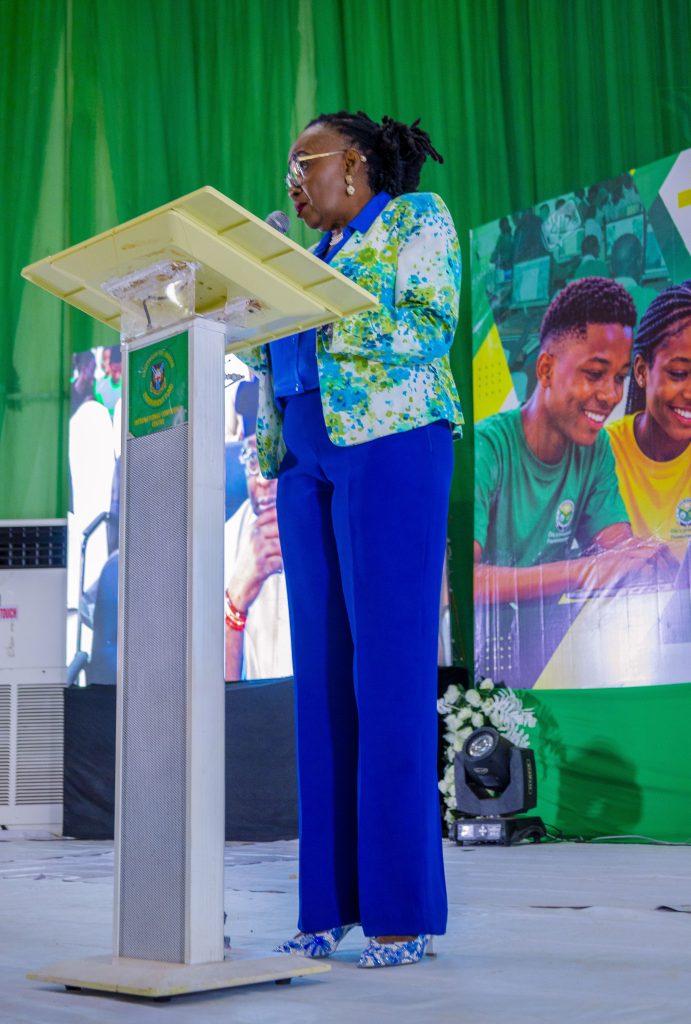
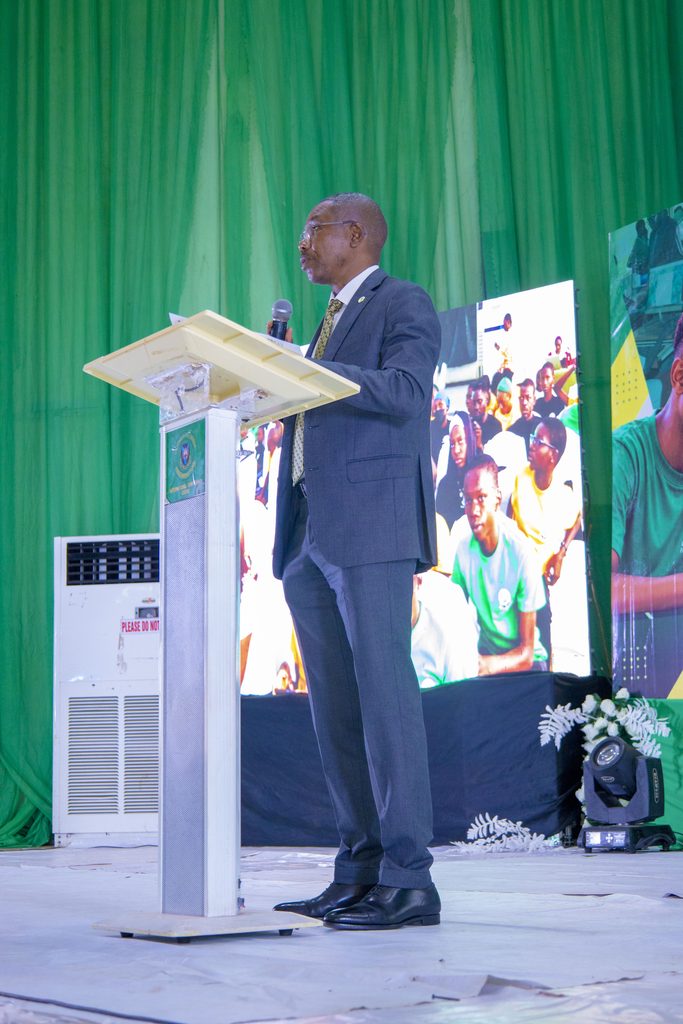
Their messages reinforced the importance of investing in education, digital capabilities and the next generation of innovators in Southwest Nigeria.
In his keynote address, titled The Future Must Carry Their Fingerprints: From Digital Access to Digital Agency, the Project Director of DEFINED, Professor Seun Kolade, reflected on the growth of Byte Busters and the importance of giving young people the opportunity to participate in shaping the digital future.
He drew attention to a significant change in the questions being asked about public school students and technology.
It is no longer a question of whether these students can learn to code, understand artificial intelligence or develop digital applications. They are already doing so.
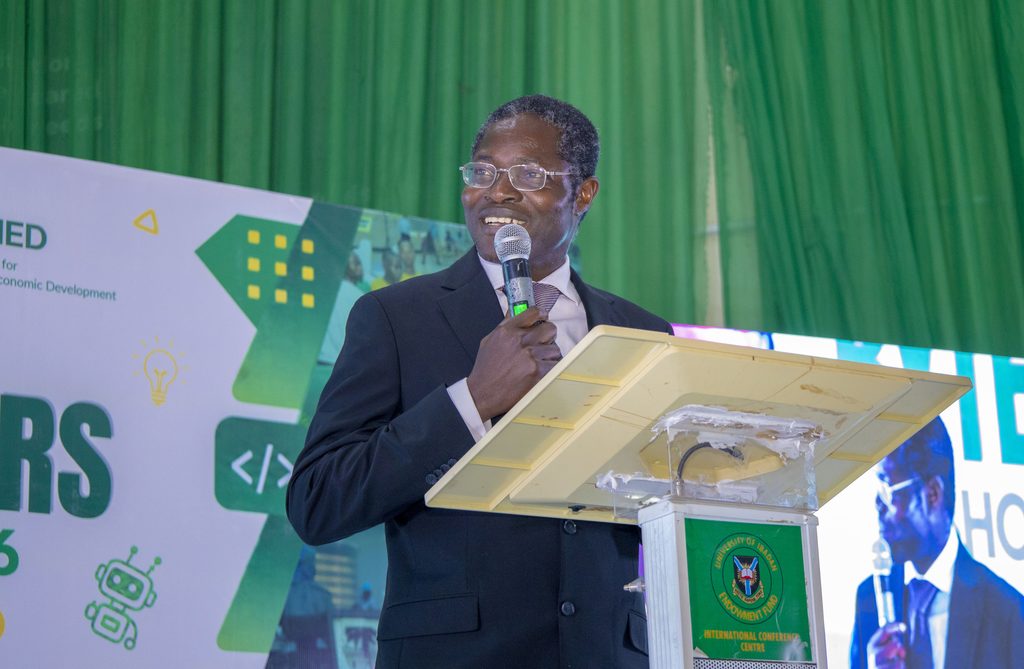
The bigger question is how many more children can be given the same opportunity.
For Professor Kolade, teaching a child to code goes beyond preparing another programmer. It develops structured thinking, persistence, collaboration and the ability to work through difficult problems.
He emphasised that talent exists everywhere, even when opportunities are unevenly distributed. Children should not have to attend privileged schools or grow up in particular locations before they can participate in the digital economy.
He also called on governments, businesses, philanthropists, old students' associations and diaspora communities to support the expansion of digital education through computers, connectivity, learning spaces, facilitators and sustained funding.
The vision is straightforward: children in public schools across Southwest Nigeria should have the opportunity to become creators of technology, not remain limited to consuming what others have built.
The most anticipated part of the event was the presentation of projects developed by the students.
Nine Year Two centres presented their projects on stage, demonstrating how the skills acquired through the Byte Busters Coding Club could be applied to issues affecting individuals, families, schools and communities.
The projects covered emergency response, online safety, education, accessibility and event management.
SafeGuardian: Helping people seek emergency assistance
Students from Aramoko District Commercial Secondary School, Ekiti State, presented SafeGuardian, a community emergency alert application designed to address delayed access to help during dangerous situations, including kidnapping, accidents, threats and harassment.
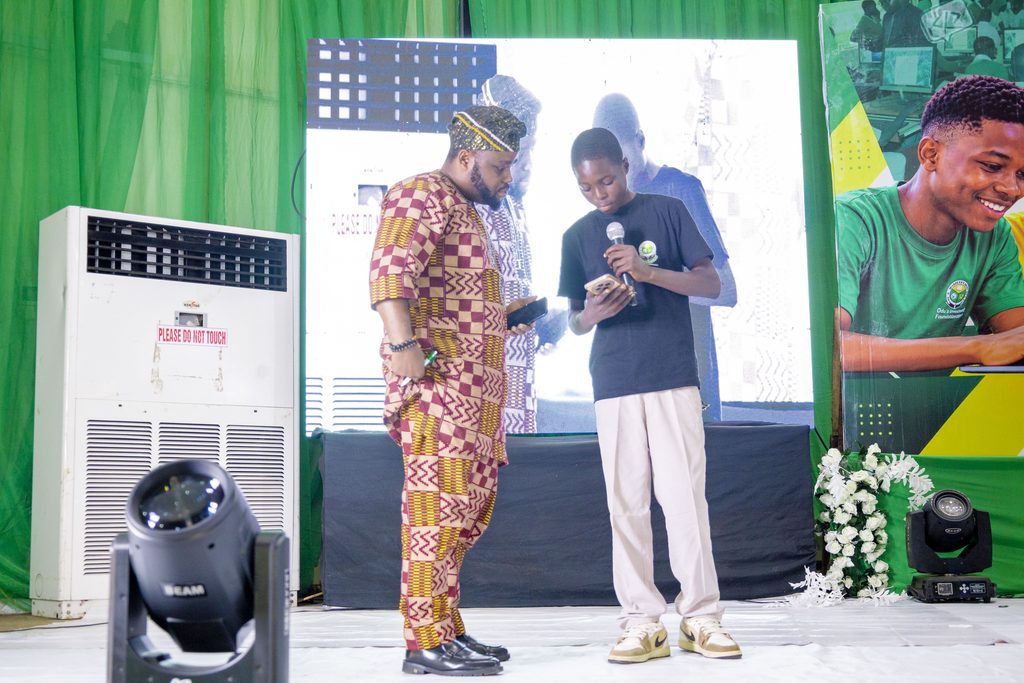
The application allows users to register trusted emergency contacts and activate an SOS alert through a button or a shake-detection feature. It is designed to obtain the user's location and send emergency notifications to trusted contacts through email and phone calls.
The idea considers situations where victims may be unable to make calls or explain where they are. By providing alternative ways to trigger an alert, the students explored how technology could help reduce delays in emergency response.
Scam Shield: Building awareness around online scams
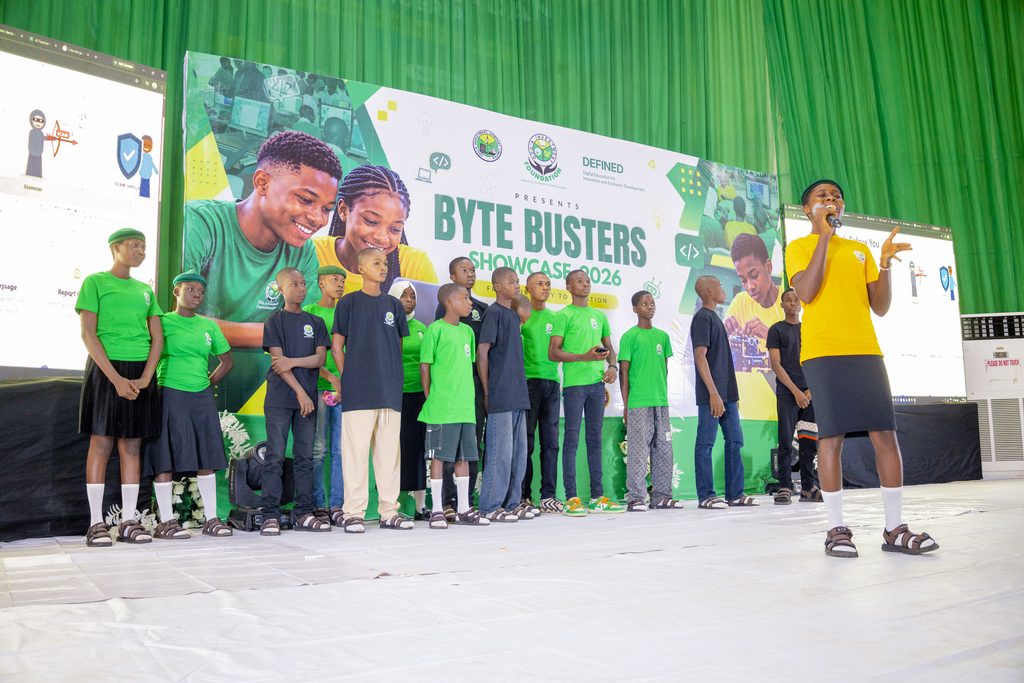
Students from Yewa College, Ilaro, presented Scam Shield, an educational awareness platform that uses curated examples to demonstrate common scam indicators and appropriate safety responses.
As more people interact with digital platforms, understanding online risks is becoming an important part of digital literacy. Scam Shield introduces students and users to ways of identifying suspicious activities and making safer decisions online.
Akẹ́kọ̀ọ́: Making learning interactive with artificial intelligence
At Gboluji Anglican Grammar School, Ile-Oluji, Ondo State, students introduced Akẹ́kọ̀ọ́, an AI-powered educational platform designed to make learning more interactive and practical.
Instead of relying solely on reading and memorisation, learners can make choices, test ideas, conduct virtual experiments and observe outcomes.
The platform is powered by Olùkọ́ni, an intelligent AI mentor that provides personalised guidance, feedback and progress tracking. Students also earn certificates after completing learning challenges across the virtual laboratories.
Lumen Pass: Simplifying event management
Students from Government College Ibadan presented Lumen Pass, a digital event management and ticketing platform.
The platform allows event organisers to create events, invite guests, manage attendance requests and generate digital tickets with unique QR codes. At the entrance, organisers can scan tickets to verify guests and prevent duplicate use.
It is an example of how students are exploring technology to improve everyday processes.
SignBridge: Using AI to make communication more inclusive
Students from Aje Comprehensive College presented SignBridge, an AI-powered platform designed to bridge the communication gap between Deaf and hearing people in Nigeria.
The platform features interactive Nigerian Sign Language lessons, camera-based practice, English-to-sign translation, an AI-powered sign language tutor and video learning resources.
Its purpose is to make learning and practising sign language more accessible while encouraging communication between people with different hearing abilities.
SOROSOKE: When a shout for help becomes an emergency alert
Students from Abeokuta Grammar School presented SOROSOKE, an AI-powered emergency safety and notification platform built around an important question: what if someone in danger could request help simply by shouting?
The project uses Google's Teachable Machine and is designed to recognise configured distress expressions in English, Nigerian Pidgin, Yoruba, Igbo and Hausa.
Its multilingual approach considers the reality that someone experiencing an emergency may not be able to communicate in English or access their phone easily.
Other Year Two projects presented included Ero Itumo from St. Bernadines Girls' Grammar School, Oyo, and AI Teacher Twin from School of Science, Ile-Ife.
Each project reflected a different way of thinking about technology and its application to real-life situations.
20 Byte Busters centres exhibit student-built technology projects
Beyond the stage presentations, 20 Year One centres showcased their projects at exhibition stands, giving visitors an opportunity to interact with the students and see their work firsthand.
The projects demonstrated the range of ideas emerging from the Byte Busters Coding Club.
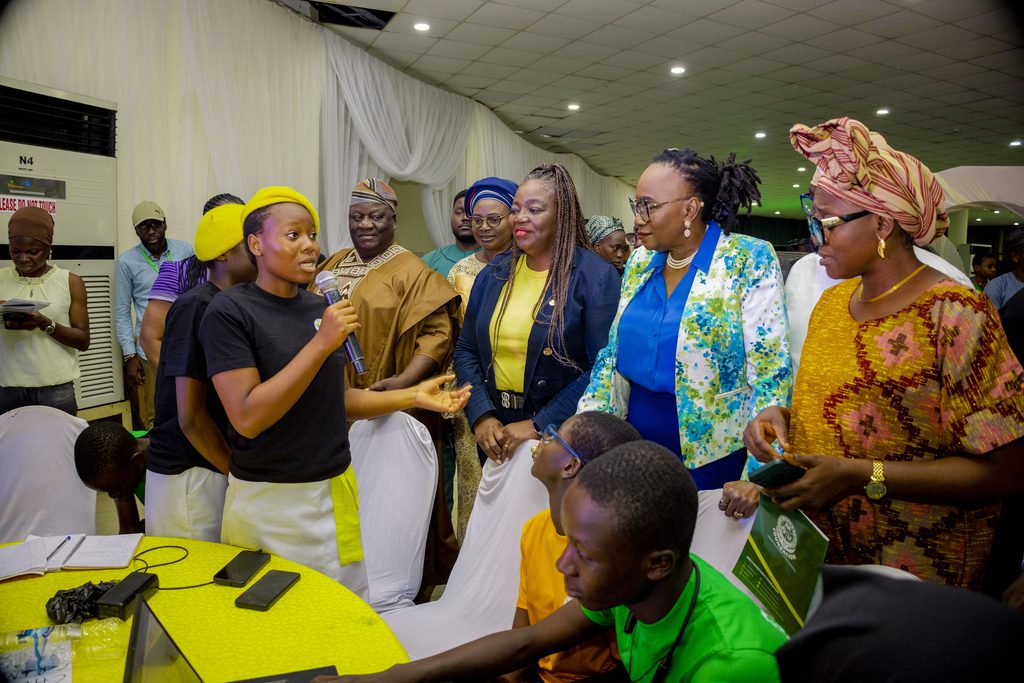
ChopChop, developed by Afrograms, is an online marketplace that brings local food vendors onto one platform. Customers can browse meals, compare prices, select vendors, place orders and pay online through Paystack.
EcoCity, from School of Science, Ile-Ife, is a city-building game designed to encourage creative thinking, problem-solving and responsible use of resources.
Learnathon, which emerged as the Year One winner, was another of the projects presented at the showcase.
The exhibition also provided an opportunity for students to explain their ideas, demonstrate how their projects worked and engage with visitors.
For many of these learners, the experience of developing a digital project involves much more than learning a programming language. It requires research, planning, teamwork, testing, troubleshooting and the willingness to keep improving an idea until it works.
These are skills that extend beyond the computer laboratory and into how young people approach challenges in their everyday lives.
Byte Busters Showcase 2026: Winning schools and projects
The event recognised the efforts and achievements of students across both categories.
The Year Two results were:
- First place: Aramoko District Commercial Secondary School, Ekiti State, with SafeGuardian.
- Second place: Aje Comprehensive College, with SignBridge.
- Third place: Abeokuta Grammar School, with SOROSOKE.
The Year One results were:
- First place: Learnathon.
- Second place: School of Science, Ile-Ife, with EcoCity.
- Third place: Afrograms, with ChopChop.
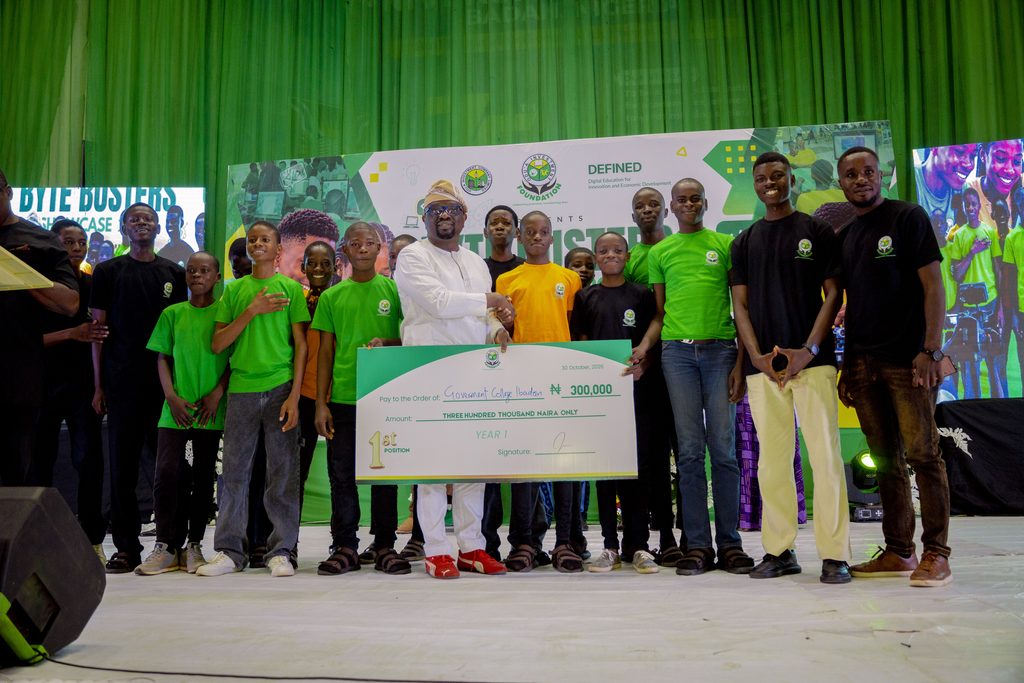
The awards recognised the creativity, teamwork and problem-solving demonstrated by the students throughout their learning and project development.
Goodwill messages were also delivered by representatives of the six Southwest states, alongside other stakeholders who expressed support for expanding digital education opportunities across the region.
The DEFINED Project recognises that equipping students with digital skills requires investment in the people who guide their learning.
This is why Odu’a Investment Foundation's work extends beyond the Byte Busters Coding Club to include the Digital Literacy Training for Teachers (DLTT) programme.
Through DLTT, teachers across the six Southwest states receive practical digital skills training to strengthen classroom instruction and improve the learning experience for their students.
The first cohort recorded 72 registered teachers, with 67 successfully completing the training.
Using a Train-the-Trainer approach, the programme is designed to extend the benefits beyond the initial participants, with a target of training 3,000 teachers by the end of 2026.
Together, Byte Busters and DLTT address two important parts of digital education: helping students develop the skills to create with technology and equipping teachers to support that development.
This wider approach is central to the Foundation's ambition to make digital literacy more accessible across public schools in Southwest Nigeria.
The second Byte Busters Showcase was a significant milestone for Odu’a Investment Foundation and the DEFINED Project. But the work ahead is considerably bigger.
Twenty centres across 18 Local Government Areas represent progress. More than 4,500 learners reached represent progress. Students presenting technology-driven solutions to real-world problems represent progress.
But across Oyo, Ogun, Osun, Ondo, Ekiti and Lagos, there are many more public secondary school students who have not yet had access to this kind of practical digital education.
The ambition is to expand the programme's reach and create more opportunities for young people to learn coding, explore artificial intelligence, develop digital creativity and build solutions that respond to the needs of their communities.
For Odu’a Investment Foundation, this is part of a broader commitment to education, healthcare and youth development across Southwest Nigeria.
The projects presented at the 2026 showcase may continue to evolve. The students will learn more, encounter new challenges and develop better ways to approach the problems they want to solve.
But something important has already happened: they have begun to see themselves as people who can build, create and contribute to the world around them.
When the technologies, businesses and solutions of the future are being developed, young people from our public schools should have the knowledge and opportunity to be part of that process.
This is what happens when access meets potential. And for Odu’a Investment Foundation, the work of making that opportunity available to more young people continues.
