

What Three Years of Evidence Reveal
Nigeria's digital education challenge goes beyond providing computers. It requires the teachers, institutional support and opportunities that turn access to technology into practical skills.
What does it take to make digital education work in public schools? Three years of implementation experience across Southwest Nigeria offer some answers.
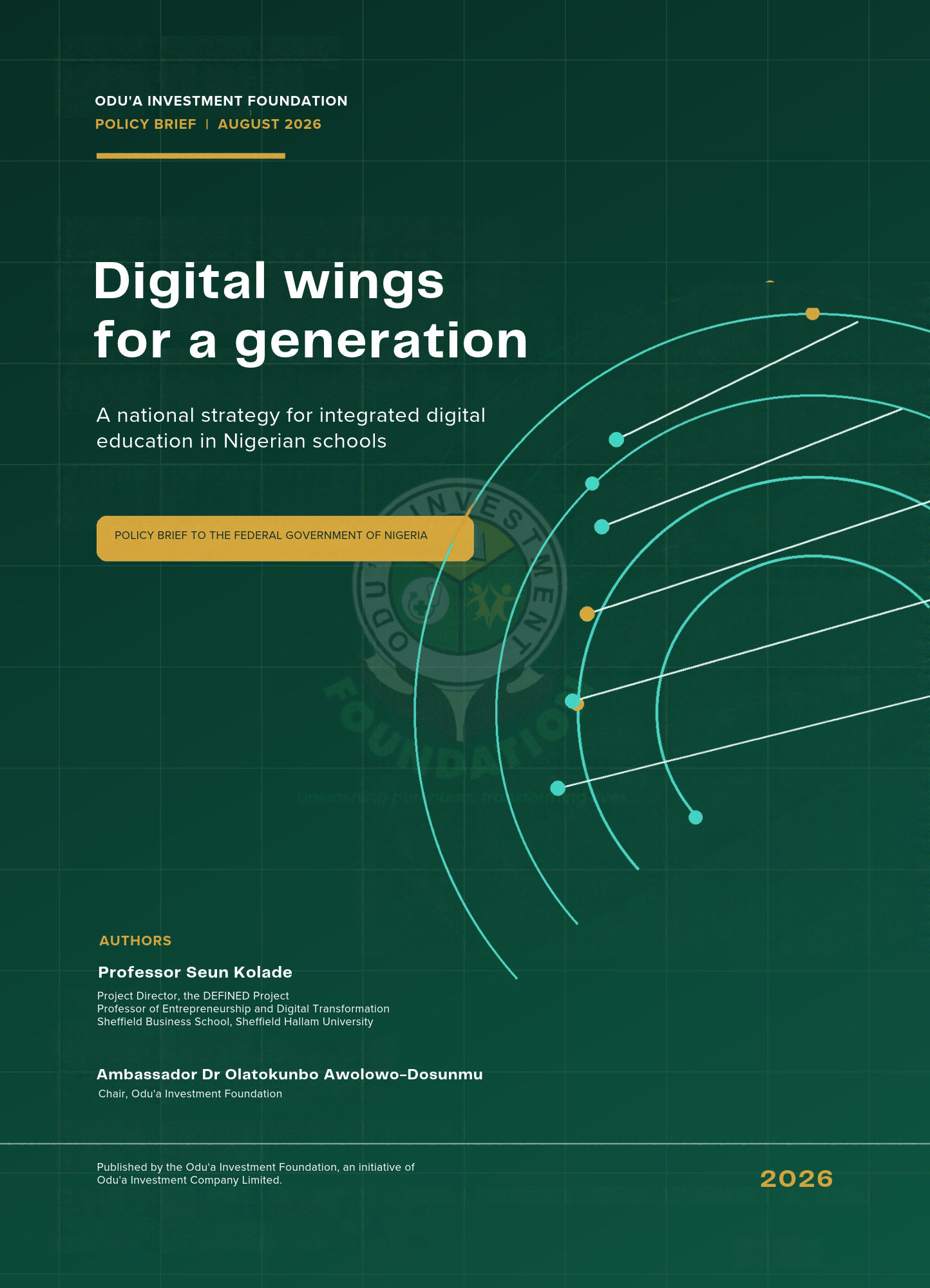
In its August 2026 policy brief, Digital Wings for a Generation, Odu'a Investment Foundation examines evidence from its Digital Education for Innovation and Economic Development (DEFINED) Project, highlighting the challenges limiting digital learning and proposing practical recommendations for strengthening digital education in Nigeria.
The central finding is clear: providing technology without addressing the conditions required to use it effectively limits its impact.
Established in 2023, the DEFINED Project operates across Oyo, Ogun, Osun, Ekiti, Ondo and Lagos States through two programmes: Byte Busters coding clubs for public secondary school students and Digital Literacy Training for Teachers (DLTT).
Evidence from the project reveals four important findings:
1. Demand exceeds available opportunities. More than 3,300 learners came forward across the pilot centres for approximately 1,300 available places, demonstrating significant interest in digital skills development among young people.
2. Teachers are central to digital learning. The availability of computers does not guarantee learning. Schools also need qualified instructors who can guide students through practical digital education.
3. Existing teachers offer a pathway to scale. Of the 72 teachers nominated for the pioneer DLTT cohort, 67 completed the programme. Following training, 65 per cent rated themselves as advanced in digital proficiency, while 83 per cent reported feeling well or very well prepared to integrate digital tools into their teaching.
4. Institutional support influences delivery. Predictable approvals, access to school facilities and coordination with education authorities are essential to sustaining digital learning opportunities.
Drawing on these findings, the policy brief presents six recommendations for strengthening digital education in Nigeria:
- Embed digital practice across the curriculum while supporting coding clubs for deeper technical learning.
- Establish a recognised Coding Instructor grade within the teaching service.
- Scale digital education through existing teachers using a certified national training model.
- Adopt a hub-and-spoke delivery structure supported by local funding.
- Establish predictable approval calendars and extend access to school computer facilities.
- Institute a national schools digital showcase and a shared system for tracking programme outcomes.
These recommendations focus on building the human and institutional capacity required to make digital education accessible, practical and sustainable.
Through Byte Busters, students develop coding, computational thinking and applied artificial intelligence skills by working on practical projects. Meanwhile, DLTT equips serving teachers to integrate digital tools into classroom learning and cascade their knowledge to colleagues.
The policy brief outlines an expansion model that will grow the DEFINED Project from 12 to 48 centres over 12 months, targeting more than 10,000 students and 96 trained ICT support staff.
It also presents a framework for extending digital education across Nigeria's 774 local government areas through interconnected school hubs and spoke centres.
Nigeria's digital future depends on more than the technology available in its schools. It depends on whether young people have the opportunity to develop the skills to create, innovate and participate in an increasingly digital economy.
The experience of the DEFINED Project demonstrates what becomes possible when students have access to practical learning, teachers receive the right support and institutions create room for innovation.
As the policy brief concludes, the difference was never the technology. It was the teacher, the open door and the permission to begin.
Odu'a Investment Foundation is making its DEFINED curriculum, training materials, monitoring platform and three years of implementation data available to the Federal Ministry of Education without charge, and stands ready to support a national pilot in any state that wishes to proceed.
Read the Full Policy Brief
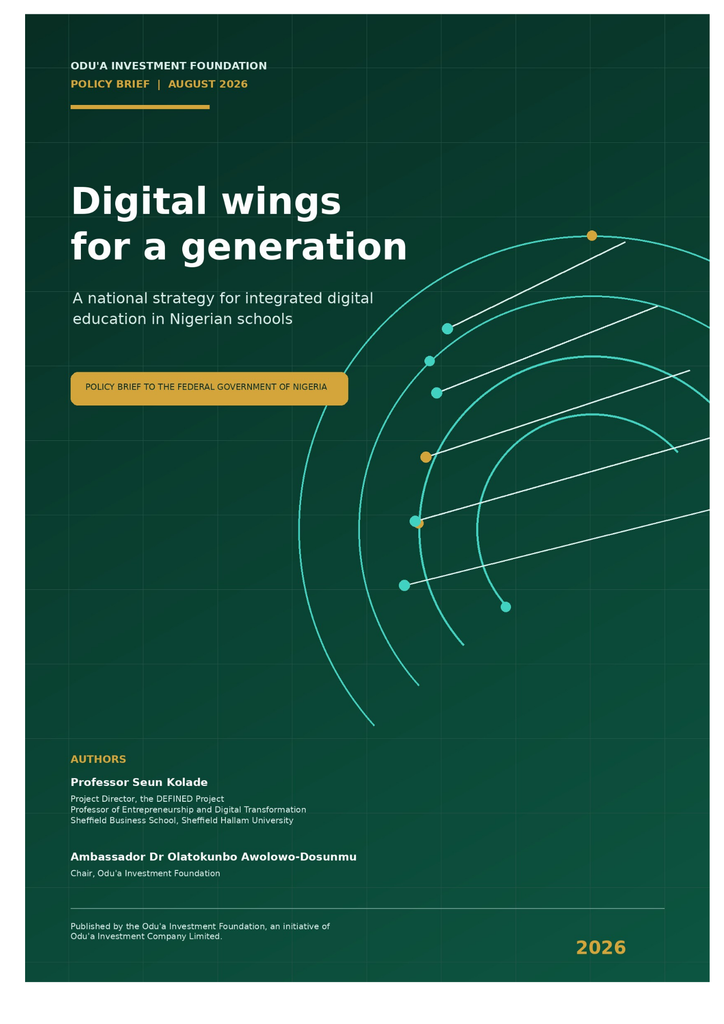
Explore the complete publication for detailed implementation evidence, findings and recommendations on strengthening digital education in Nigeria.
Download: Digital Wings for a Generation – Policy Brief (August 2026)
